Minimalism as a Mental Health Strategy: 5 Things It Actually Involves
Introduction: The Moment I Realized My Stuff Was Weighing Me Down
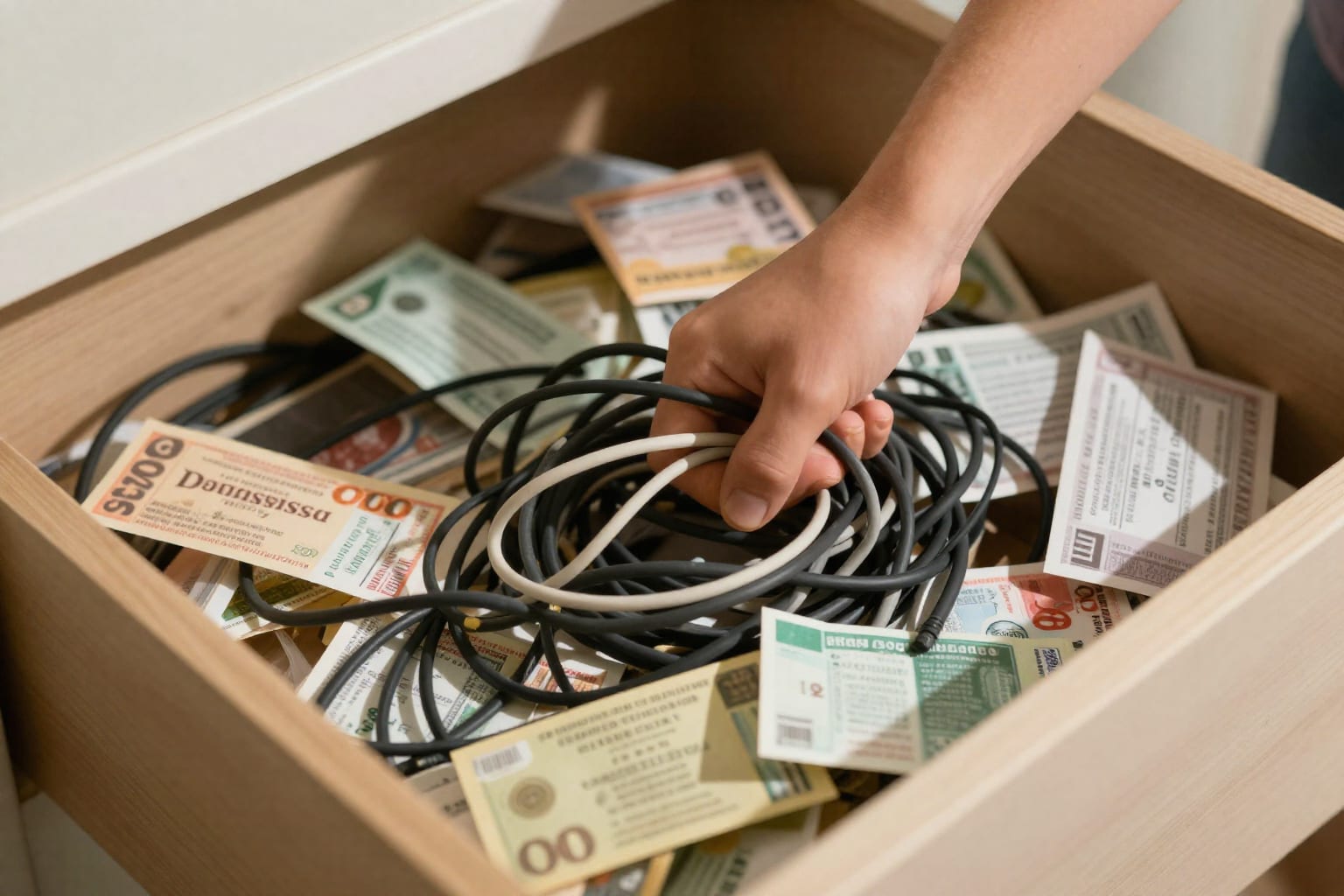
I was standing in my kitchen, staring at a drawer that wouldn't close. It was stuffed with takeout menus from restaurants that had closed three years ago, expired coupons, and a tangle of charging cables for devices I no longer owned. My shoulders were tight, my jaw was clenched, and I felt a low-grade dread that I couldn't quite name. That drawer wasn't just messy—it was a physical manifestation of every unfinished task, every forgotten promise, every bit of noise I carried in my head.
I'd read about minimalism before, but I always dismissed it as something for rich people who could afford to buy everything new or for ascetics who wanted to live in a white room with one chair. That day, I realized I'd been wrong. Minimalism, I discovered, isn't about deprivation. It's about mental clarity. It's a strategy for reducing the constant, low-level stress that comes from owning more than we can manage. And it starts with one simple question: What if my stuff is making me sick?
So I spent a year experimenting. I read, I gave things away, I failed, I started over. And what I learned surprised me. Minimalism as a mental health strategy isn't about having less for the sake of having less. It's about five specific practices that change how your brain works. Here's what it actually involves.
Intentional Curation: Why Keeping Less Means Choosing What Matters
The first thing I learned is that minimalism isn't about emptying your home. It's about intentional curation. Think of it like a museum curator who doesn't just throw everything into a room—they decide which pieces tell the story they want to tell. Every item you own is a decision you have to make: Where does it go? Do I need it? Should I fix it? That's mental load, and it adds up faster than you'd think.
When I started, I pulled everything out of my closet and asked myself one question for each item: Does this serve my current life or my past self? That question alone cut my wardrobe in half. But the real shift wasn't the physical space—it was the mental space. I stopped feeling that flicker of guilt every time I opened the closet and saw clothes I never wore but couldn't let go. Decision fatigue is real. Every object you own is a micro-decision waiting to happen. When you reduce the number of objects, you reduce the number of decisions, and your brain finally gets a break.
This is backed by research. A 2011 study from Princeton University found that visual clutter competes for your attention, leading to decreased focus and increased stress. The American Psychological Association has also highlighted how clutter can trigger cortisol release. When I reduced my possessions by about 40%, I didn't feel deprived—I felt lighter. My morning routine went from picking through piles to grabbing what I actually needed. That's the mental health payoff of curation: you're not losing things; you're gaining bandwidth.
Boundaries Over Bareness: The Real Mental Health Shift
Here's the counterintuitive part: minimalism isn't really about stuff. It's about boundaries. The same muscle you use to say no to a bargain bin sweater is the muscle you use to say no to an overcommitting weekend. When I started decluttering my physical space, I noticed I was also starting to say no to social obligations that drained me. I began setting clearer boundaries at work. I stopped checking email after 8 p.m. The stuff was just the training ground.
This is where minimalism as a mental health strategy gets real. You can have an empty apartment and still be miserable if you haven't set boundaries on your time and energy. In fact, I've seen people go full minimalist—white walls, one chair, a single mug—and still feel anxious because they were saying yes to every request and never taking time to rest. The stuff is symbolic. The real work is learning to protect your mental space.
For me, the breakthrough came when I realized I could apply the same curation principle to my calendar. I started asking: Does this commitment add value to my life, or is it just noise? I dropped two volunteer commitments that felt like obligations. I stopped attending meetings that could have been emails. And I started blocking out Friday afternoons for nothing—just rest or creative time. The result? My anxiety levels dropped noticeably within a month. I was sleeping better, less irritable, and more present with my family. Minimalism isn't about bareness; it's about creating room for what matters.
Practice Over Perfection: Minimalism as an Ongoing Habit, Not a Destination
One of the biggest mistakes I made early on was thinking minimalism was a one-time event. I spent a weekend bagging up donations, feeling triumphant, and then three months later, my desk was cluttered again. I felt like a failure. But here's the truth: minimalism is a practice, not a destination. It's like brushing your teeth—you don't do it once and expect your teeth to stay clean forever. You do it daily.
This reframe was crucial for my mental health. When I stopped treating minimalism as a rigid ideal (you can only own 100 things! no sentimental items allowed!), I stopped feeling guilty when I slipped. Guilt and shame are toxic for mental health—they're the opposite of the calm I was seeking. So I gave myself permission to be imperfect. I keep a small box of sentimental items that make me happy. I have a drawer of camping gear I use twice a year. That's not failure; that's thoughtful curation.
The sustainable approach is to build small habits that prevent the clutter from coming back. I spend ten minutes each evening tidying up the living room. I do a 15-minute digital declutter on Sunday nights. I keep a donation box in the garage, so when I find something I no longer need, I toss it in immediately rather than letting it sit and guilt-trip me. These tiny habits add up to a low-stress environment without the pressure of perfection. And that's the real mental health win: not a perfect home, but a home that supports your peace of mind.
The 5 Core Practices That Actually Help Your Mind
After a year of trial and error, I've settled on five practices that consistently lower my stress and sharpen my focus. They're not dramatic. They're not Pinterest-worthy. But they work.
1. The One-In-One-Out Rule
This is the simplest mental boundary you can set. Whenever you bring something new into your home—a shirt, a book, a kitchen gadget—you must let go of something similar. One new shirt means one old shirt goes to donation. This rule forces you to pause and ask: Is this worth the cost of losing something else? It's not about deprivation; it's about intentionality. I've found this rule prevents the slow creep of clutter that eventually overwhelms me. It's like a gatekeeper for my mental space.
2. Digital Decluttering
Your phone is probably a bigger source of mental clutter than your closet. I deleted 40 apps I hadn't used in three months. I unsubscribed from every marketing email. I turned off all non-essential notifications. The result? I check my phone half as often, and when I do, I'm not bombarded with noise. Digital clutter creates a constant state of partial attention, which research links to higher stress and lower cognitive performance. A 15-minute digital purge once a month keeps that noise at bay.
3. Time-Blocking for Rest
This is the boundary practice I mentioned earlier. I block out at least two hours each week that are sacred—no work, no errands, no social obligations. I use that time to read, walk, or just sit and think. It sounds simple, but it's revolutionary for mental health. When you schedule rest like you schedule a meeting, you're telling your brain that your peace is non-negotiable. This practice alone has reduced my anxiety more than any decluttering session ever did.
4. The 30-Day Minimalism Challenge
I tried this as an experiment: for 30 days, I got rid of one item on day one, two on day two, three on day three, and so on. By day 30, I had removed 465 items. But the real benefit wasn't the number—it was the mindset shift. Each day forced me to look at my possessions with fresh eyes. I realized how much I was holding onto out of habit or fear. The challenge gave me momentum and taught me that letting go is a skill you can build. It's not about suffering; it's about discovering what you truly need.
5. Gratitude Journaling for What You Keep
This is the one that surprised me most. Instead of focusing on what I was getting rid of, I started writing down three things each day that I was grateful to own. My coffee maker. My hiking boots. My grandmother's photo. This practice shifted my perspective from scarcity (I'm losing things) to abundance (I have what matters). It directly combats the anxiety that comes from comparing your minimalism to someone else's. And it makes the act of keeping feel intentional and joyful, not restrictive.
These five practices aren't a magic cure. But together, they create a system that reduces decision fatigue, lowers visual and digital clutter, protects your time, builds the skill of letting go, and anchors you in gratitude. That's a powerful combination for anyone struggling with stress or anxiety.
Frequently Asked Questions
Is minimalism the same as living with nothing?
No—it's about keeping only what adds value or joy, not about extreme deprivation. It's a personalized mental health tool, not a competition. You can own 50 things or 500 and still practice minimalism if each item serves a purpose.
Can minimalism actually reduce anxiety?
Yes, by lowering decision fatigue and visual clutter, many people report feeling calmer and more in control. But results vary individually. If you're dealing with clinical anxiety, minimalism can be a helpful supplement—but not a replacement—for professional care.
How do I start minimalism if I'm already overwhelmed?
Start with one small area (like a drawer or your phone) and use a timer for 10 minutes. Focus on the feeling of relief, not perfection. The goal is to reduce stress, not add another chore to your list.
Will minimalism fix my depression?
Minimalism is a supportive strategy, not a cure. It can reduce environmental stressors, but professional help is essential for clinical depression. Think of it as clearing the path so you can walk more easily, not as the destination itself.
What if my family doesn't want to declutter?
Focus on your own spaces and boundaries. You can practice personal minimalism without forcing others, which models rather than demands change. Your peace doesn't depend on their participation.
Your Takeaway
Minimalism as a mental health strategy isn't about living with nothing. It's about living with enough—and knowing the difference. Start with one drawer, one rule, one hour of rest. The goal isn't a perfect home; it's a calmer mind. And that's something worth keeping.